
Module 1: We Love Our Planet
We Love
Our Planet
UNDERSTAND
Student Learning Standards and Additional Lessons, Materials & Activities by State
New Jersey
Objective: to understand that the water, the land, and the air are natural elements that we have on Earth; that these 3 natural elements keep us healthy and safe
Vocabulary: natural element
Reading: Here We Are
Science Activity: Natural Element Jars

Earth Friends Lesson
Module 1: Lesson 2
Begin Lesson
move: 7 minutes
Our Solar System
This is a repeated activity with ASL signs that describe a feature of each planet. If you repeat Our Solar System during each lesson of Module 1, the repetition will help the children learn that Earth is a planet in our solar system, and it is special because it supports life. We live on Earth!
We are going to learn about the different planets in our solar system. Every planet is special in its own way, and we are going to pretend to be the planets moving around the sun.
SUN: Our Sun gives us light during the day and all the energy we need to live. Make a C-motion away from forehead with right hand.
MERCURY: Mercury is the smallest planet. Squeeze 2 fingers together to indicate tiny.
VENUS: Venus is the brightest planet. Use 2 hands to fan out from center.
EARTH: Earth is our home and the only planet that supports life. Cross arms in front of chest for hug.
MARS: Mars has the biggest volcano. Form a triangle with index fingers and then make an explosion sign with right hand.
JUPITER: Jupiter is the biggest planet. Move hands apart from center.
SATURN: Saturn is the planet with rings. Draw a ring around right hand with left.
URANUS: Uranus is the coldest planet. Shiver.
NEPTUNE: Neptune is the farthest away. Point far away with right index finger.

Use the photo book to
familiarize the children with
photos of the planets.
Curious Question
What 3 things can you find on Earth that allow us to live here?
Prompt: Think of the 3 colors you painted on your pendant.
Main Lesson
Earth has 3 natural elements that make it a good home for humans like you and me. Land, Water, and Air. Animals and plants need land, water, and air too.
Natural Element Jars
Everyone can take turns to discover our 3 natural elements-land, water, and air. Pass around the Natural Element Jars for the children to hold and look at and study.
Natural Element Jars:
Materials Needed: 3 repurposed clear glass jars (at least 12 oz.) with lids
Preparation: Fill the 3 jars halfway (not full) with the following:
LAND: Fill this jar with soil or anything from the ground outside.
WATER: Fill this jar with water from a lake, river, stream, or ocean—or the tap if you’re not near water.
AIR: For air, you can ask the children to take a breath in and blow on their hand. You can’t see air, but you can feel it when you breath out. You can pass the empty jar around and ask the children to add air to it. Once everyone has blown into the empty jar, seal it with the AIR inside.
You can keep the 3 natural element jars in a common area, science area, or discovery center in the classroom after this lesson and encourage the children to look at them.
sit & learn: 5 minutes
Land Water Air
Have all the children stand on one side of the room or learning space.
LAND: Raise your hand if you can tell me where we can find LAND on Earth. Who lives or plays on land?
Once a child shares an animal (like a bunny or horse) or human (a farmer or a kid) or maybe a plant (a tree or flower), have them “move” to the other side of the space if they were that animal, human, or plant. (Examples: bunnies hop; farmers might dig or drive a tractor; trees have leaves that move around). Continue until all children that want to participate have had the chance to “move” across the land. We build things on land. We grow food on land. We run around on the land.
WATER: Once everyone is on the other side of the space, introduce water. Who lives or plays on water? Proceed in the same way, based off what the children share—fish, sailors, seaweed and allowing them to move how each moves through or across water. We use water to take baths. We can go swimming in water. The ocean is full of salt water.
AIR: Raise your hand if you can tell me where we can find AIR on Earth, and proceed with AIR asking the children to move like animals, humans, and plants in the air (birds, pilots, and dandelions). We can't see the air, but we breathe the air to live. And it's full of clouds. Clouds make Earth look white from space. Earth's air is called atmosphere. It's not too cold and not too hot.
Land Water Air is a great activity for outside of the classroom or outdoors, because it gives children a lot of space to move. This can be anything from a playground to forest trail to a gymnasium.
Closing Sentiment
Everyone that lives on Earth needs land, water, and air to be safe and happy and healthy. We share our land, water, and air. We are all Earth Friends.
move & engage: 8 minutes

Use the images in the photo book
to show the children what
land, water, and air look like.
End Lesson
Teachers in the Classroom
Teacher Activity
Classroom Earth Mosaic
This Creative Activity allows the children to create their own Classroom Earth to hang on the wall. This collaborative artwork Earth will give them a better grasp on how we represent Earth with a view from space, and as the lessons progress, you can use this Classroom Earth to talk about and reference what the children are learning and experiencing.
Materials Included: Classroom Earth Graphic PDF (download here)
Materials Needed: thin white or neutral-colored cloth; pencil; colored pencils; (green, blue, white) paper or fabric pieces* ; non-toxic glue; a red heart
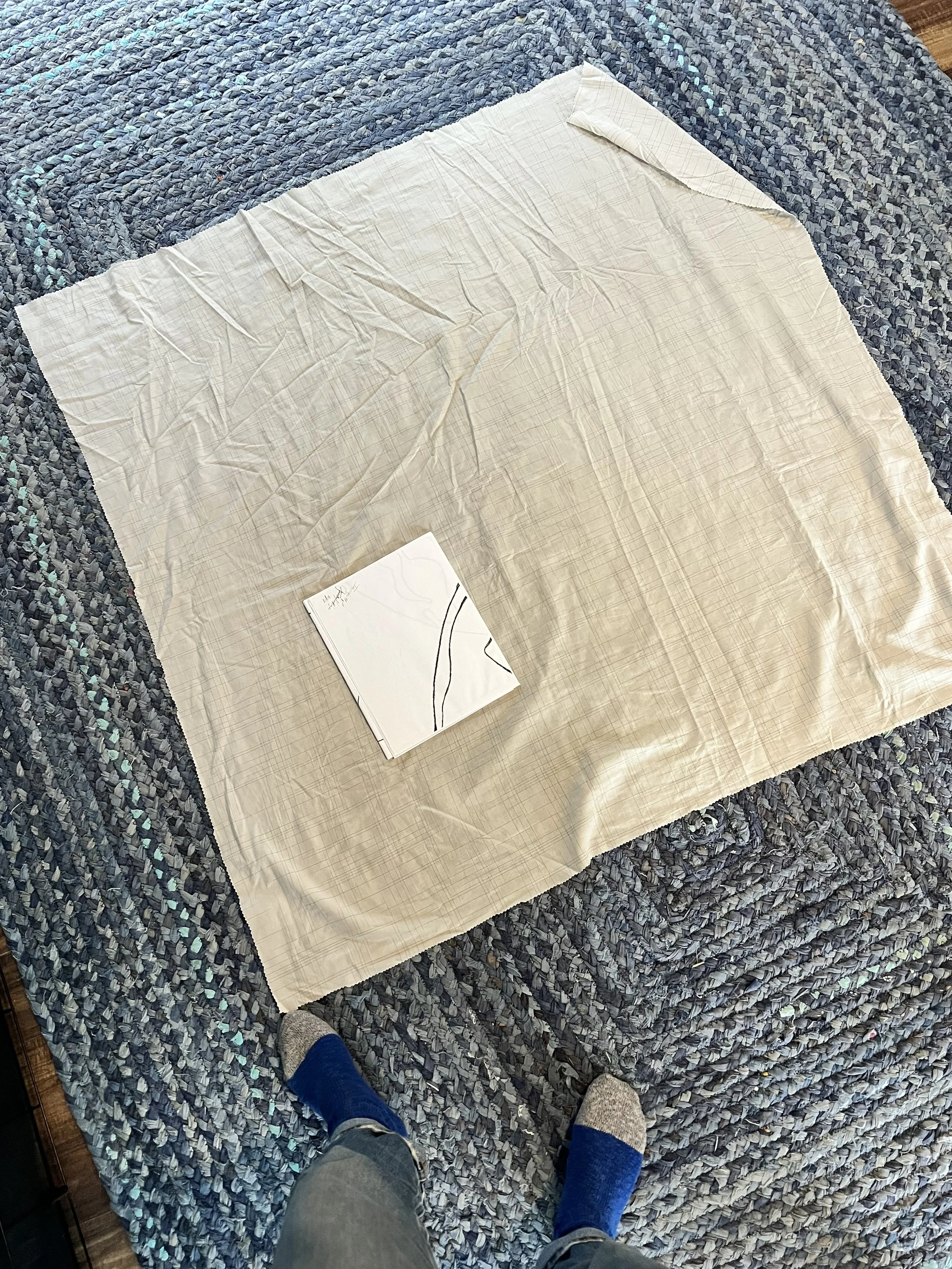
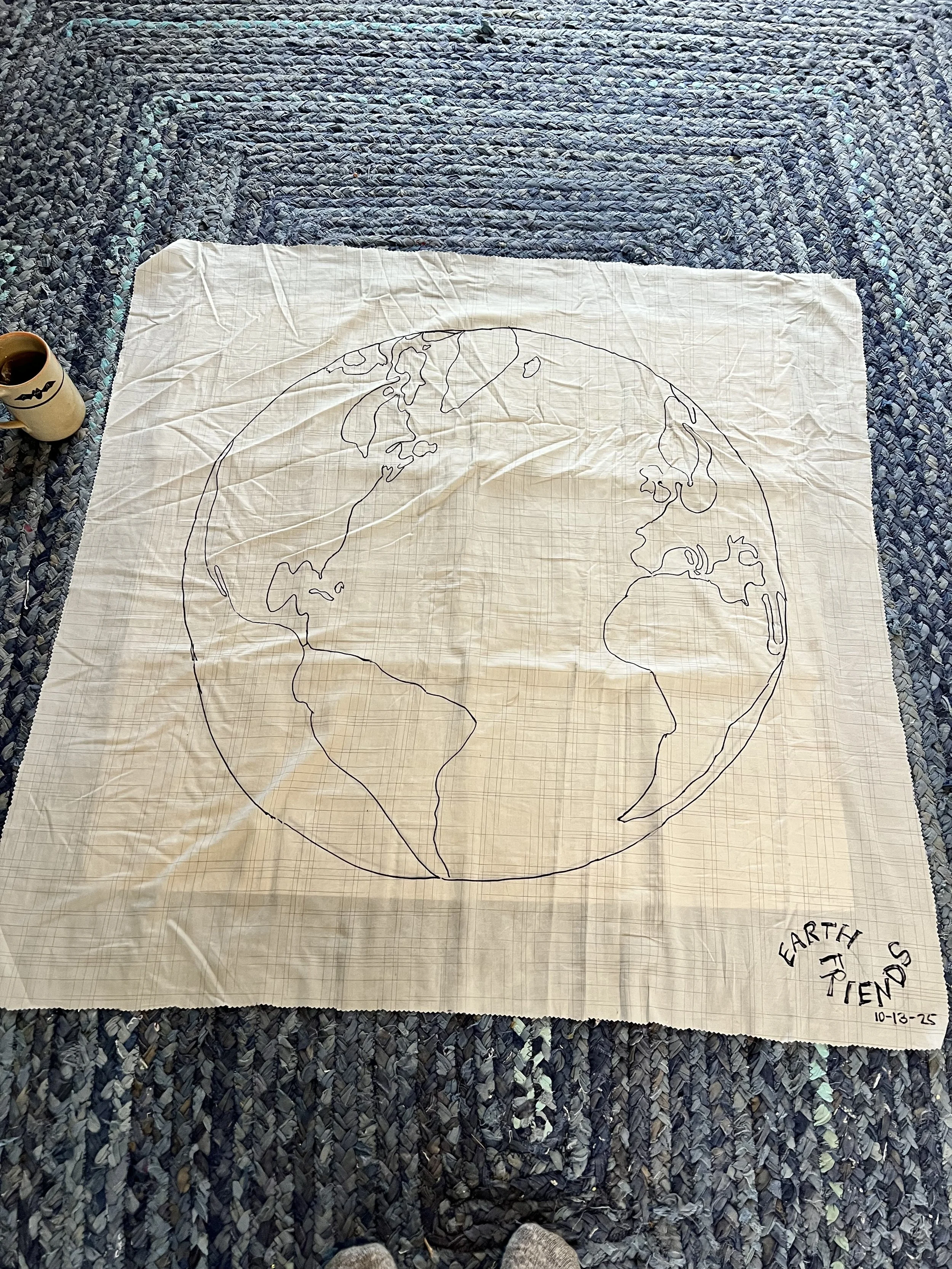
Preparation: Unfold the Classroom Earth Graphic and assemble. The 1 is the top left, and the 12 is the bottom right. Tape the pieces together, and then lay flat. Place the white or neutral fabric over top to trace. (Fold up to use next time!). You can a dark pencil or marker to trace the pattern. Optional: us colored pencils to mark or color in the blue and green sections for reference for the children.
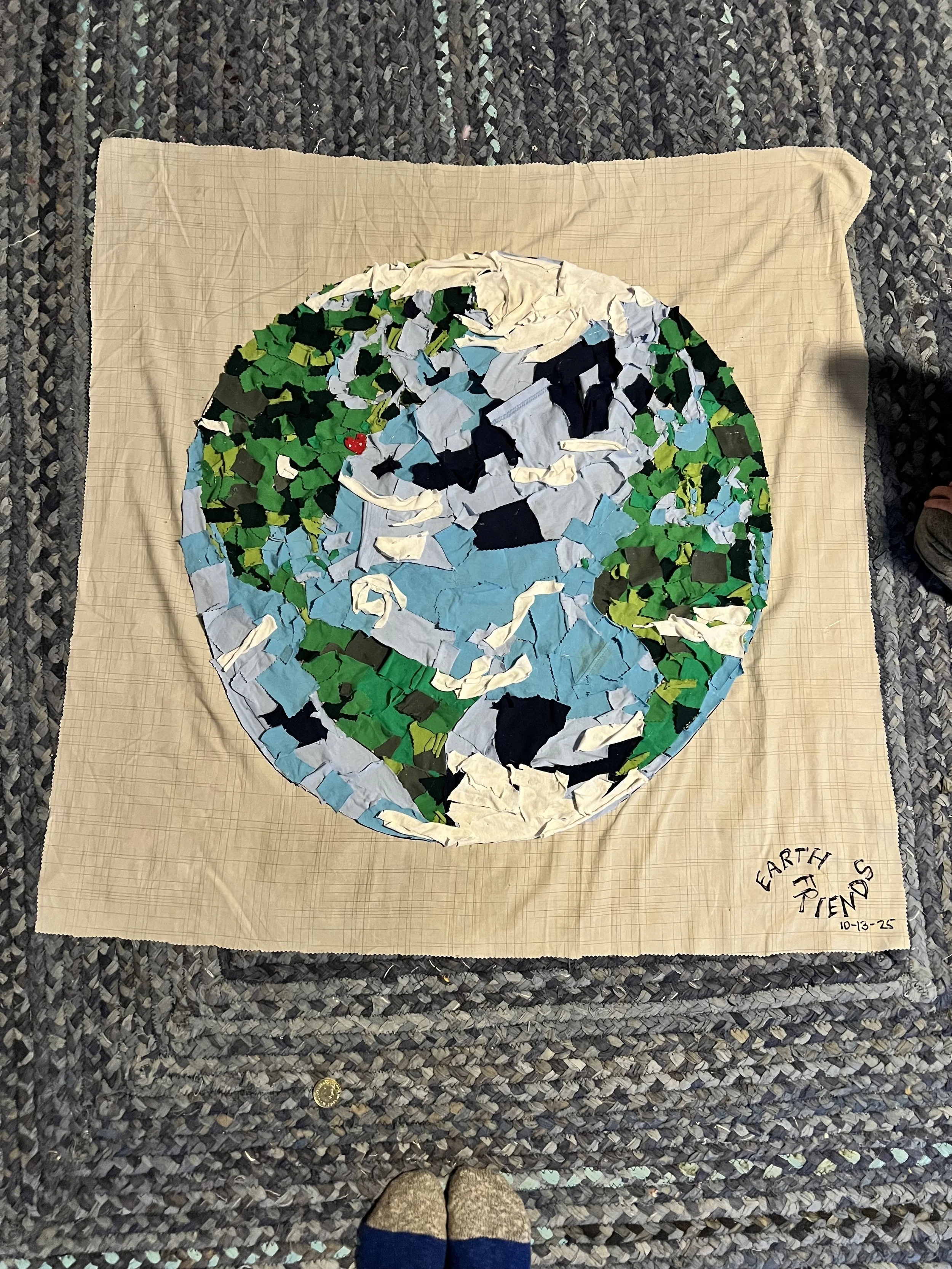
Step 1: Have the children glue small pieces of green, blue, and white fabric to fill in the green land masses and blue ocean on Earth, like a mosaic. This is best done over time because it’s a project.
Step 2: Glue a red heart to the place on the Earth that is the closest approximation to where the children are right now.
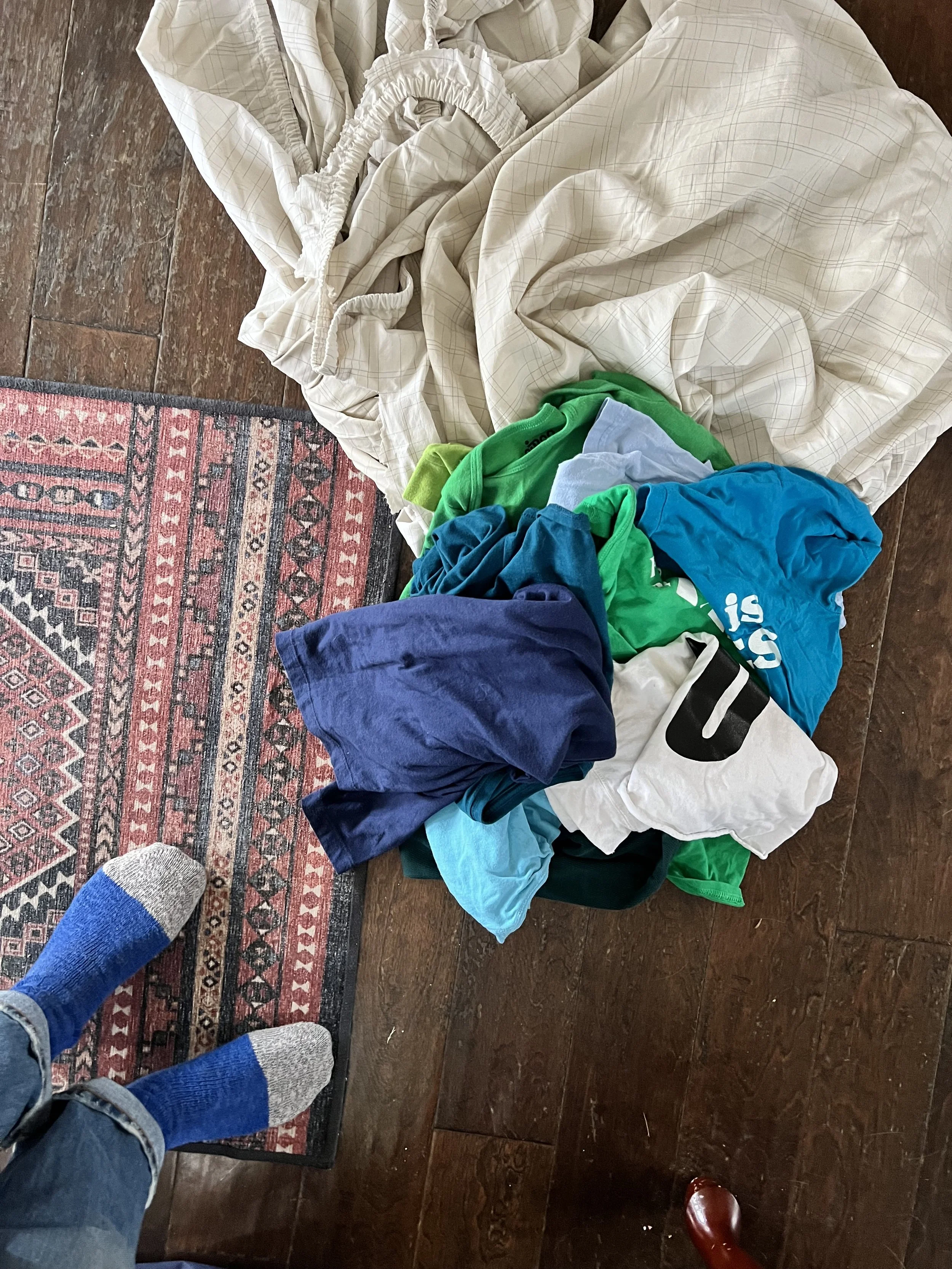
*Reuse Bonus: collect old T-shirts or clothes, any material in blue, green, white that can be cut into 1x1 in. squares for the mosaic instead of purchasing fabric or construction paper.
Throughout the Week
Explore: the 3 Natural Element Jars in a circle and talk about where we can find land, water, and air on Earth. Store them in the Science or Discovery Center for the children to explore when not being used.
Create: by continuing to glue fabric to the Classroom Earth and add to the mosaic. The denser, the better for future lessons.
Reading: Here We Are
Vocabulary: Earth, natural element
Good Choices
I can share.
I can take my turn looking at the Natural Element Jars.
When I share, there is enough time for everyone to look and explore, just like there is enough land, water, and air to share here on Earth.
Gather scraps of fabric or old clothes.
Tape the 12 printable PDFs together to trace over the fabric (use a dark pencil or marker).
Now you have your Earth, ready to become blue, green, and white!
This one has all kinds of blue and all kinds of green, and many clouds. Our heart is
over New Jersey.
Vocabulary:
Earth: Earth is the only planet where we humans, animals, and plants can live. This makes Earth very special. Earth is not too hot and not too cold. It's just right for life.
natural element: Earth has 3 natural elements that make it a good home for humans like you and me. Land, Water, and Air. Animals and plants need land, water, and air too
Families at Home
Discuss: We are learning that Earth is our planet, and there are other planets in outer space. Look up at the sky and talk about what you see. What do you see at night? What do you see during the day? Can you see other planets? Try a free app on your phone called SkyView (Lite) on Apple or Android to find what's up in the night sky. Have a pair of binoculars? You can see other planets, and you don't even need a telescope.
Create: We learned that there are 3 natural elements that are very important on Earth. Create your own Natural Element Jars at home.
Natural Element Jars:
Materials Needed: 3 clear glass jars (at least 12 oz.) with lids
Preparation: Fill the 3 jars halfway (not full) with the following:
LAND: Fill this jar with soil or anything from the ground outside.
WATER: Fill this jar with water from a lake, river, stream, or ocean.
AIR: Put a feather from a bird inside this jar.
© Earth Friends Incorporated | earthfriends.us